More than anyone, this book is for young people – an invitation to once again remake the world, and to bring about, through hard work, determination, and a big dose of imagination, an America that finally aligns with all that is best in us.
Barack Obama
As a fan of politics, government and international relations in general, I’ve always had a keen interest in the role that the United States of America plays on the international stage. Whilst their presence in international affairs isn’t always successful or positive, there is no doubt that they have and will continue to have a strong influence on shaping our world, and the way it operates in the 21st century. Needless to say then I was interested to read Barack Obama’s presidential memoir A Promised Land, and understand how the US Government runs and operates (both domestically and internationally) and the challenges that his administration faced.
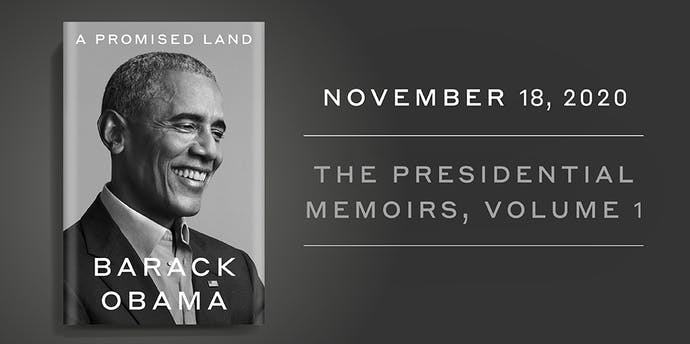
A Promised Land is the first of two volumes of Obama’s presidential memoirs, and convers the period from his childhood to his political career in the Illinois Senate and US Senate, and culminates in his presidential years up to Operation Neptune Spear, the raid that killed bin Laden in 2011. Some of the major topics discussed in the book include his career as US Senator for Illinois; the 2008 presidential election campaign; the Global Financial Crisis; The Affordable Care Act (Obamacare); the wars in Afghanistan and Iraq; Wall Street reform; the Deepwater Horizon oil spill, the Israel-Palestine conflict; the Arab Spring; and Operation Neptune Spear.
At over 700 pages, the book seems daunting to read, even for experienced readers of non-fiction. However, Obama is an excellent writer and has a wonderful gift in being able to explain detailed policies and legislation in plain English, whilst also keeping the reader entertained. This is done through providing background and context for a particular policy/event/issue, whilst also explaining the motivations and reasons for a particular policy/meeting/decision, and the effects that it will have on the population in general. A bit like the cause-effect relationship. This allows the reader to become more educated and informed about his motivations and decisions, whilst also making the book more interesting and relatable.
There are many notable victories and failures covered throughout the book. The most significant ones however, are his victory in the 2008 presidential election, and the passage of the Recovery Act and the Affordable Care Act, which addressed the Global Financial Crisis and the healthcare system in the US. Through a magnifying lens we are able to see his motivations, belief, and disappointments in the presidential election campaign, and the ups and downs of the political rollercoaster on the road and throughout the primaries and debates. We also see the enormous challenges faced in the passing of the Recovery Act and the Affordable Care Act, due to the huge political, business and public opposition at the time. The arduous and painstaking process of drafting legislation and consultation with key stakeholders makes their eventual passing joyous and memorable, even though we know the end result already. Above all, Obama never wavers from his belief of hope for building a better America for his fellow citizens.
Yet we are also witness to his notable failures in political life. Key examples include the attempted closure of Guantanamo Bay, the ongoing Israel-Palestine conflict, immigration reform and the DREAM Act, and the losses in the 2010 midterm elections. The DREAM Act, which aimed to give undocumented child and teenager immigrants temporary legal residence and a road towards citizenship, was a significant goal for Obama and its failure to pass the US Senate is a tough pill to swallow for his team. Other failures not mentioned in the book include the anarchy in Libya after Gaddafi’s death, and the deportation of over 2 million undocumented immigrants. The worsening political situation in the Middle East after the Arab Spring is also another disaster, as is the deployment of 30,000 more troops to Afghanistan in 2009 and the deaths of soldiers on duty.
Also touched upon is the worsening political climate of Washington and the erosion of democratic norms by the Republican party, and the increasing division among Americans, which would become eventually evident in the 2016 and 2020 presidential elections. Trump also gets a brief mention towards the end, foreshadowing events to come. The final section is also excellent and reads more like a crime novel than a political memoir, without going into spoilers.
A Promised Land is an excellent political memoir by a gifted writer and is one of the best books of 2020. I look forward to the publication and release of the second volume.
Further information:
https://www.penguin.com.au/books/a-promised-land-9780241491515
 Andrew Reviews
Leave a comment